

Capital Update – For the Week Ending July 31, 2026
In the weekly recap from the National Pork Producers Council: NPPC’s Marotz, Zieba on Trade Mission to Philippines; Producers Want Uniform National Food Ingredient Regulations; and NPPC submits follow-up comments on AGOA to USTR. Find out more below.

Listen to the Capital Update Here!
NPPC’s Marotz, Zieba on Trade Mission to Philippines
What happened: NPPC Vice President Todd Marotz, chief production officer for Wakefield Pork in Sleepy Eye, Minnesota, and NPPC Vice President of Government Affairs Maria C. Zieba were in the Philippines last week on a trade mission with Nebraska Gov. Jim Pillen and a number of Cornhusker farmers.
The delegation met with Philippines government officials and representatives of the Meat Importers and Traders Association and the Philippine Association of Meat Processors Inc., or PAMPI, as well as with H.E. Lee Lipton, the U.S. ambassador to the Philippines. The group also toured a meat processing plant in San Fernando, about 40 miles north of Manila, and met with officers of the Federation of Pork Producers of the Philippines (PROPORK).
Marotz spoke at the PAMPI general membership meeting, where he noted the longstanding partnership between the U.S. meat sector and the Philippine meat processing industry. He also pointed out that the U.S. and Philippines pork industries benefit from – and need – predictable trade policies.
“We know that businesses perform best when policies are rooted in transparency, science, and predictability,” said Marotz. “Stable trade policies help advance our industry by encouraging investment, long-term supply relationships, food affordability, and manufacturing competitiveness.”
NPPC’s position: NPPC has worked for years with the U.S. and Philippines governments to expand access for U.S. pork to the Philippines market. It strongly supports the U.S.-Philippines Trade and Investment Framework Agreement and the Philippines’ favorable trade treatment under the U.S. Generalized System of Preferences.
Why it’s important: The Philippines is an important market for the U.S. pork industry. Last year, America’s pork producers shipped more than $133 million of product to the island nation. For the past several years, the Philippines has been battling African swine fever, so it relies on the United States to meet its growing consumer demand for pork and expanding foodservice and processing sectors
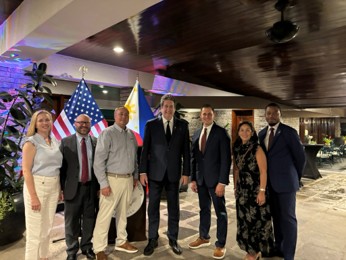
U.S. Ambassador to the Philippines Lee Lipton (center) joins NPPC and USDA’s Foreign Agricultural Service office at the Embassy. The group discussed continued U.S. Embassy support for a predictable, rules-based trading environment and more opportunities for U.S. pork.
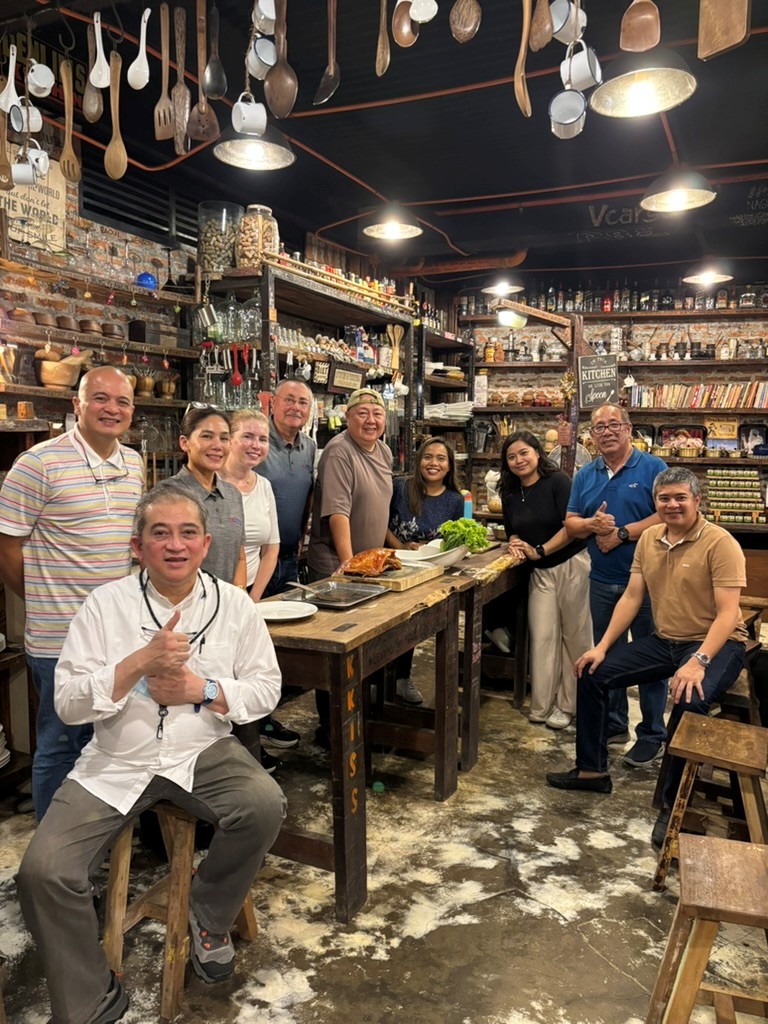
NPPC representatives share a meal of oven roasted pork belly and other local dishes with the National Association of State Departments of Agriculture Philippine Delegation. In October 2025, NPPC joined the Philippine delegation in Kansas for a study tour of U.S. agriculture hosted by NASDA and the State of Kansas.
Producers Want Uniform National Food Ingredient Regulations
What happened: A coalition of agriculture, consumer products, food, ingredient, manufacturing, and retail organizations including NPPC urged Congress to establish a science-based national framework for the U.S. Food and Drug Administration to use in its oversight of food ingredient regulations.
The Americans for Ingredient Transparency, or AFIT, request comes amid a growing number of states adopting their own food ingredient rules – including bans and warning labels – some of which are more stringent than FDA regulations. In 2025, 140 bills related to food additives and ingredients were introduced in 38 states, according to the government relations firm MultiState.
In a July 28 letter to House and Senate leadership, the AFIT coalition asked lawmakers to:
- Establish and preserve a single, uniform national standard for food ingredient review, use, and labeling requirements.
- Reaffirm FDA’s role as the primary federal authority responsible for setting the floor and ceiling for food ingredient safety and regulation.
- Advance transparency and consumer confidence by providing more information to consumers through practical, science-based reforms that are consistent nationwide.
- Modernize the Generally Recognized as Safe, or GRAS, framework in a manner that is risk-based, workable, and uniformly implemented across all states.
- Protect food affordability and supply chain resilience, ensuring continued access to safe, nutrient dense, and competitively priced product choices.
Why it’s important: A growing patchwork of state laws threatens to create conflicting compliance obligations for manufacturers, retailers, distributors, farmers, and food producers, AFIT pointed out in its letter. And those differing policies will increase compliance costs, disrupt supply chains, cause consumer confusion, and raise food prices. Studies estimate state ingredient disclosure mandates enacted in 2025 alone could increase annual grocery costs by as much as 12%, according to the coalition. As additional states pursue similar measures, the costs will continue to increase.
NPPC Submits Comments on AGOA Market Access
What happened: NPPC submitted comments to the Office of the United States Trade Representative requesting that African Growth and Opportunity Act benefits be withheld until market access barriers for U.S. exports in AGOA-eligible countries are addressed. AGOA allows eligible countries to export products to the United States duty-free, provided they offer reasonable and equitable market access to U.S. goods.
NPPC supports AGOA’s goals of increasing trade and investment with sub-Saharan Africa, promoting economic growth, encouraging regional integration, and strengthening the region’s participation in the global economy. However, U.S. pork producers have faced significant market access barriers throughout the region for many years, particularly in South Africa and Nigeria, despite those countries receiving AGOA benefits.
South Africa’s trade deficit with the United States continues to grow, while Nigeria has shifted from a goods trade deficit to a trade surplus. NPPC believes both countries should demonstrate meaningful progress in removing barriers to U.S. pork exports before receiving additional AGOA benefits.
Why it’s important: The United States is one of the world’s largest pork exporters, shipping more than 3 million metric tons of pork, valued at $8.4 billion, to more than 100 countries each year. Expanding market access is critical to the continued growth of the U.S. pork industry.
NPPC noted that gaining access to these markets “would allow U.S. pork producers to increase the value of each hog sold.” While NPPC strongly supports expanding international trade, it does not support AGOA countries receiving preferential U.S. tariff benefits while maintaining market access barriers that restrict U.S. pork exports.