
Capital Update – For the Week Ending July 24, 2026
In the weekly recap from the National Pork Producers Council: NPPC in Mexico City for USMCA talks; Senate committee passes childhood diabetes bill with problematic provisions for meat; House passes short-term funding measure; and pork producers take center stage at Ag Media Summit. Find out more below.

Listen to the Capital Update Here!
NPPC in Mexico City for USMCA Talks
What happened: Trade officials for the United States, Mexico, and Canada met in Mexico City for their third round of talks on the U.S.-Mexico-Canada Agreement, which covers about $2 trillion in trade among the three countries. The United States recently decided not to renew the trade deal for a 16-year period, opting instead for annual reviews over the next 10 years.
NPPC board member and Ohio pork producer Pat Hord and NPPC Vice President of Government Affairs Maria C. Zieba attended the talks, affirming the organization’s support for “targeted improvements” to USMCA to “promote long-term certainty and stability for farm families and workers in the food manufacturing sector.”
NPPC and the Agricultural Coalition for USMCA, of which NPPC is a member, recently asked President Trump to renew the agreement, calling it “foundational to American food and agriculture’s success.”
NPPC’s take: NPPC strongly supports renewal of USMCA, which has facilitated and streamlined the flow of commerce throughout North America.
“Ensuring USMCA remains intact is vital to continuing the mutually beneficial trading relationships U.S. pork enjoys with both Canada and Mexico,” NPPC President Rob Brenneman, a pork producer from Iowa, recently said.
Why it matters: U.S. pork exports account for the equivalent of more than $66 of value for each hog marketed and sustain more than 155,000 American jobs. In 2025, Mexico and Canada were the No. 1 and No. 4 export markets, respectively, for U.S. pork, accounting for a third of all the U.S. pork industry’s exports. USMCA provides certainty in those markets and ensures the value of pork exports remains strong.
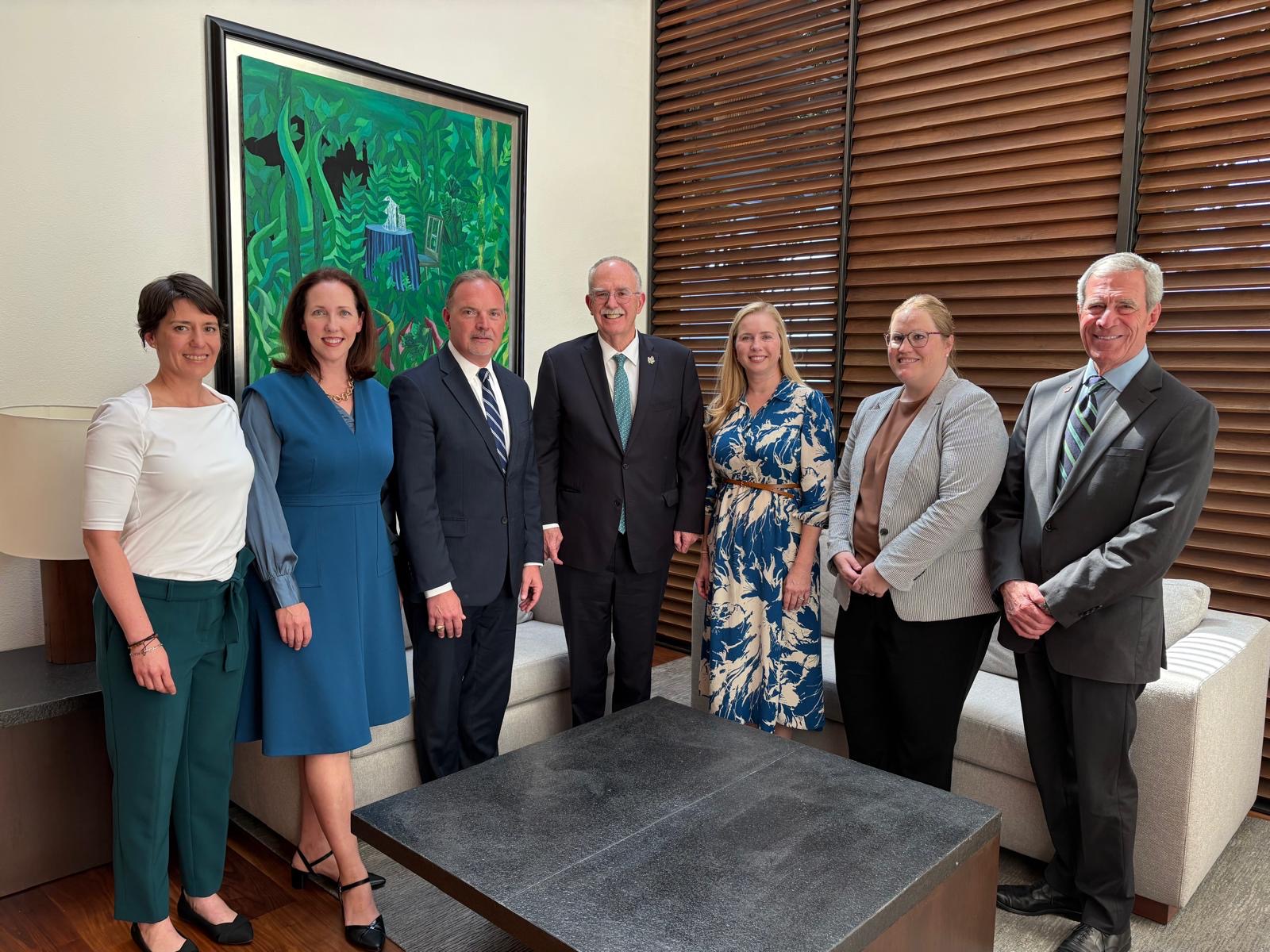
NPPC Vice President of Government Affairs Maria C. Zieba (center, right) is joined by officials and stakeholders during USMCA meetings in Mexico City. Immediately to her right is Dr. Julio Berdegué, chief international adviser to Mexican President Claudia Sheinbaum on the United States-Mexico-Canada Agreement (USMCA).
Senate Committee Passes Childhood Diabetes Bill with Problematic Provisions for Meat
What happened: The U.S. Senate Committee on Health, Education, Labor, and Pensions marked up the “Childhood Diabetes Reduction Act,” the aim of which is to reduce childhood obesity and diet-related chronic diseases—but includes provisions problematic for the meat industry.
Among other mandates, the childhood diabetes bill defines ultra-processed foods, and it would require the U.S. Food and Drug Administration to put labels warning about the health effects of foods that are high in “nutrients of concern” such as saturated fat and sodium.
NPPC has raised concerns about those provisions previously, pointing out in comments to FDA that there is no consensus on what constitutes ultra-processed foods, and coming up with a definition that “incorporates the nuances of food processing and nutrition for the goal of improving public health” would be difficult. NPPC suggested elevating the importance of nutritional composition while protecting processes and ingredients that promote nutrient bioavailability, food safety, and shelf-stability.
Sen. Tammy Baldwin (D-WI) was the lone Democrat to vote against the bill, while Sens. Bill Cassidy (R-LA) and Roger Marshall (R-KS) voted for its passage.
NPPC’s take: NPPC supports efforts to reduce childhood diabetes and obesity while protecting access to affordable, nutrient-dense foods such as pork. It cautioned that federal labeling of, and “education” on, certain foods should distinguish between ultra-processed, calorie-dense products and foundational, nutrient-dense foods that contribute protein, vitamins, and minerals to healthy eating patterns. Using the term ultra-processed could unintentionally misclassify nutrient-dense foods simply because they are processed and prompt consumers not to eat them.
NPPC pointed out that pork can be part of a balanced diet and provides high-quality protein, as well as nutrients such as thiamin, niacin, vitamin B6, vitamin B12, selenium, zinc, phosphorus, and choline.
Why it matters: Consumer health and safety are priorities of U.S. pork producers, and ensuring Americans have access to nutrient-dense pork will help improve the nation’s nutrition and positively impact health.
House Passes Short-Term Funding Measure
What happened: The House of Representatives approved a continuing resolution to fund the government, including the U.S. Department of Agriculture, from Oct. 1 through Dec. 4. As of this report, the House had passed only three of the 12 fiscal 2027 appropriations bills; the Senate had yet to consider any of the funding bills.
The CR, which now goes to the Senate, would give lawmakers a little more time to approve the appropriations measures for fiscal 2027, which start Oct. 1. It would keep federal agencies funded at fiscal 2026 levels.
NPPC’s take: While NPPC is supportive of the short-term CR to keep federal programs running, it would prefer – and will push for – full fiscal 2027 funding as soon as possible.
Why it matters: Without approval of annual funding bills, important government programs, including ones that benefit agriculture, and the personnel who implement and administer them would be furloughed, negatively affecting those who rely on them.
Pork Producers Take Center Stage at 2026 Ag Media Summit
What happened: The pork industry was well represented at last week’s Agricultural Media Summit, held this year in St. Louis.
Jackie Ponder, a legal expert and pork producer from Indiana who serves on NPPC’s board of directors, was on a newsmaker panel on farm issues, discussing what’s at stake for American agriculture. She was joined by fellow pork producer Maddie Hokanson, who serves on the executive board of Minnesota Pork, and United Soybean Board executive committee member Kyle Durham to talk trade, markets, freedom to operate, economic impacts and regulatory challenges reshaping agriculture. The panel was cosponsored by NPPC and United Soybean Board and kicked off the conference following the keynote address.
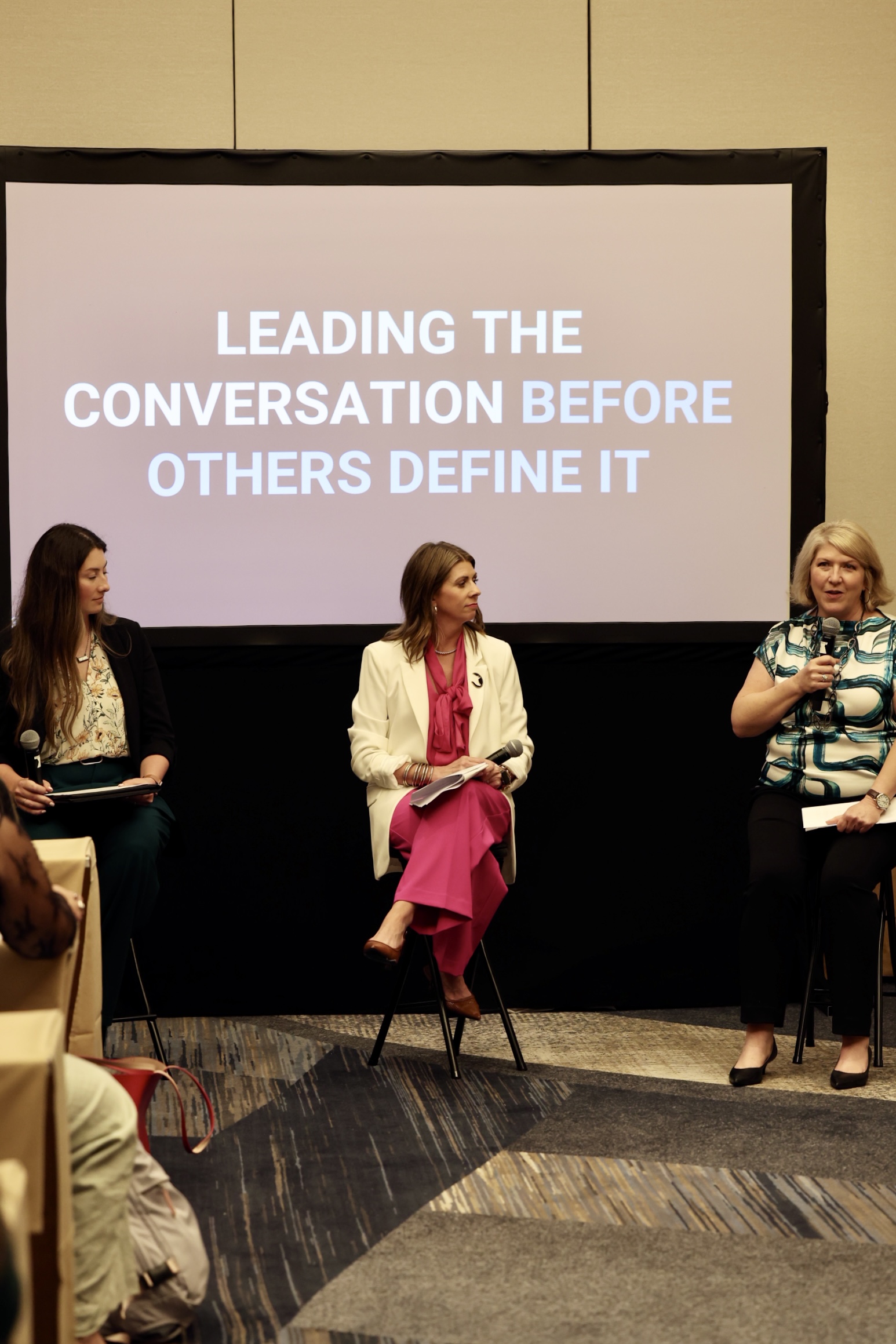
Additionally, conference attendees heard from NPPC’s Wendy Brannen, vice president of communications and marketing, Kylee Deniz, executive director of the Oklahoma Pork Council, and animal care expert Dr. Alexis Main, the three of whom participated in a session titled Leading the Conversation Before Others Define It. Oklahoma Pork facilitated the session, which included educational, hands-on, and panel components. Deniz, Main and Brannen discussed how agriculture can better connect with consumers through authentic storytelling, education, community engagement, and credible voices, along with sharing their hands-on state and national experience.
Why it matters: Begun in 1999, the Ag Media Summit is the largest gathering of the agriculture industry’s top writers, editors, photographers, publishers, and strategic communicators.
The annual professional conference, hosted by the Agricultural Communicators Network and the Livestock Publications Council with support from the Ag Media Council, provides opportunities for professional development, industry networking, and education.
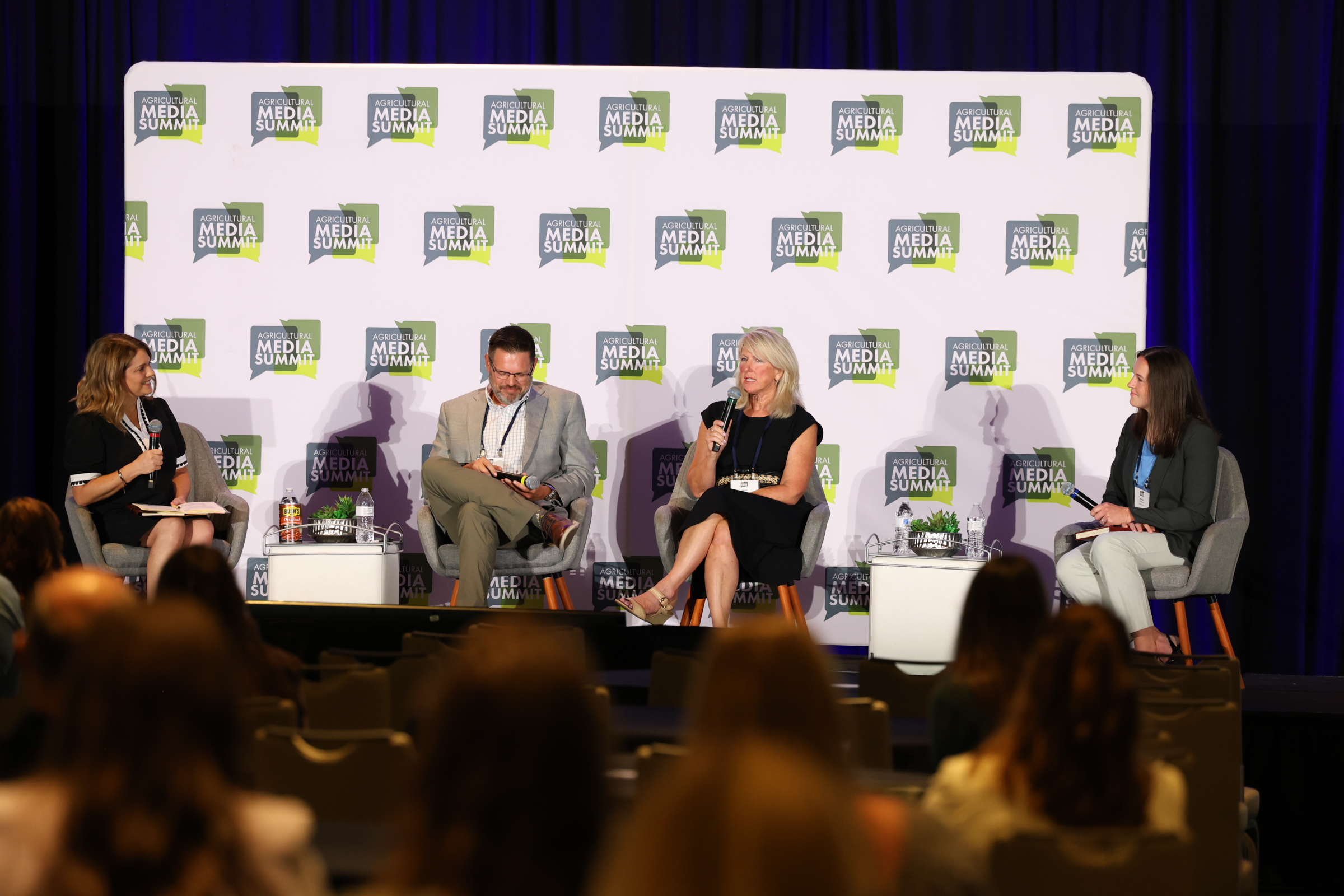
Producers Kyle Durham, United Soybean Board, Jackie Bowman Ponder, National Pork Producers Council, Maddie Hokanson, Minnesota Pork Board, speak during an NPPC/USB cosponsored Newsmaker Panel, moderated by Jennifer Shike of Farm Journal’s PORK (left), at this year’s Agricultural Media Summit titled Fields, Farms & Financial Stability: What’s Really at Stake for American Agriculture.
Doctor Alexis Main, Paradigma Agricultural Innovations and Consulting, LLC, Oklahoma Pork Council Executive Director Kylee Deniz, and NPPC Vice President of Communications and Marketing Wendy Brannen lead a panel discussion and interactive session on “leading the conversation before others define it” organized by OPC at Ag Media Summit in St. Louis.