

Capital Update – For the Week Ending Sept. 18, 2026
In the weekly recap from the National Pork Producers Council: pork producers push lawmakers for Prop. 12 fix, farm bill, USMCA; new farm bill clears Senate Ag panel, ready for Senate vote; USDA buys pork for federal food nutrition, assistance programs; EPA proposes final ‘Waters of the United States’ rule; and lawmakers want ‘high-quality’ extension of USMCA. Find out more below.

Listen to the Capital Update Here!
Pork Producers Push Lawmakers for Prop. 12 Fix, Farm Bill, USMCA
What happened: Getting a new farm bill with a provision fixing California Proposition 12 was the top legislative priority for the nearly 150 pork producers who were in Washington, D.C., for NPPC’s fall Legislative Action Conference. Producers from nearly 30 states participating in the biannual fly-in also raised with their Senate and House lawmakers several other issues important to the U.S. pork industry.
Producers asked members of Congress to:
- Expand the H-2A visa program, which allows temporary seasonal foreign-born agricultural workers into the United States, to year-round workers so it can be used by livestock producers.
- Support the U.S.-Mexico-Canada Agreement and urge the three countries to maintain the pact.
- Continue support for the U.S. Swine Health Improvement Plan – a cooperative state-federal industry program to improve the health of pigs and pork products – through adequate funding and establishment of a federal advisory committee.
During the fly-in, producers heard congressional updates from Reps. Glenn “GT” Thompson (R-PA), and Shontel Brown (D-OH), and Sen. Joni Ernst (R-IA). Thompson and Ernst were recognized for their work on a new farm bill and a Proposition 12 fix and their longtime support for the U.S. pork industry with NPPC’s “Bringing Home the Bacon” award. NPPC producer leadership and staff met with officials from the U.S. Department of Agriculture, and the group hosted the Capitol Hill-famous Baconfest congressional reception.
Check NPPC’s Facebook page to view photos.
Why it matters: NPPC’s biannual legislative fly-in is an important opportunity for its members to help advance various issues of importance to the U.S. pork industry and for policymakers to learn about the benefits the industry provides in their districts, states, and throughout the country.
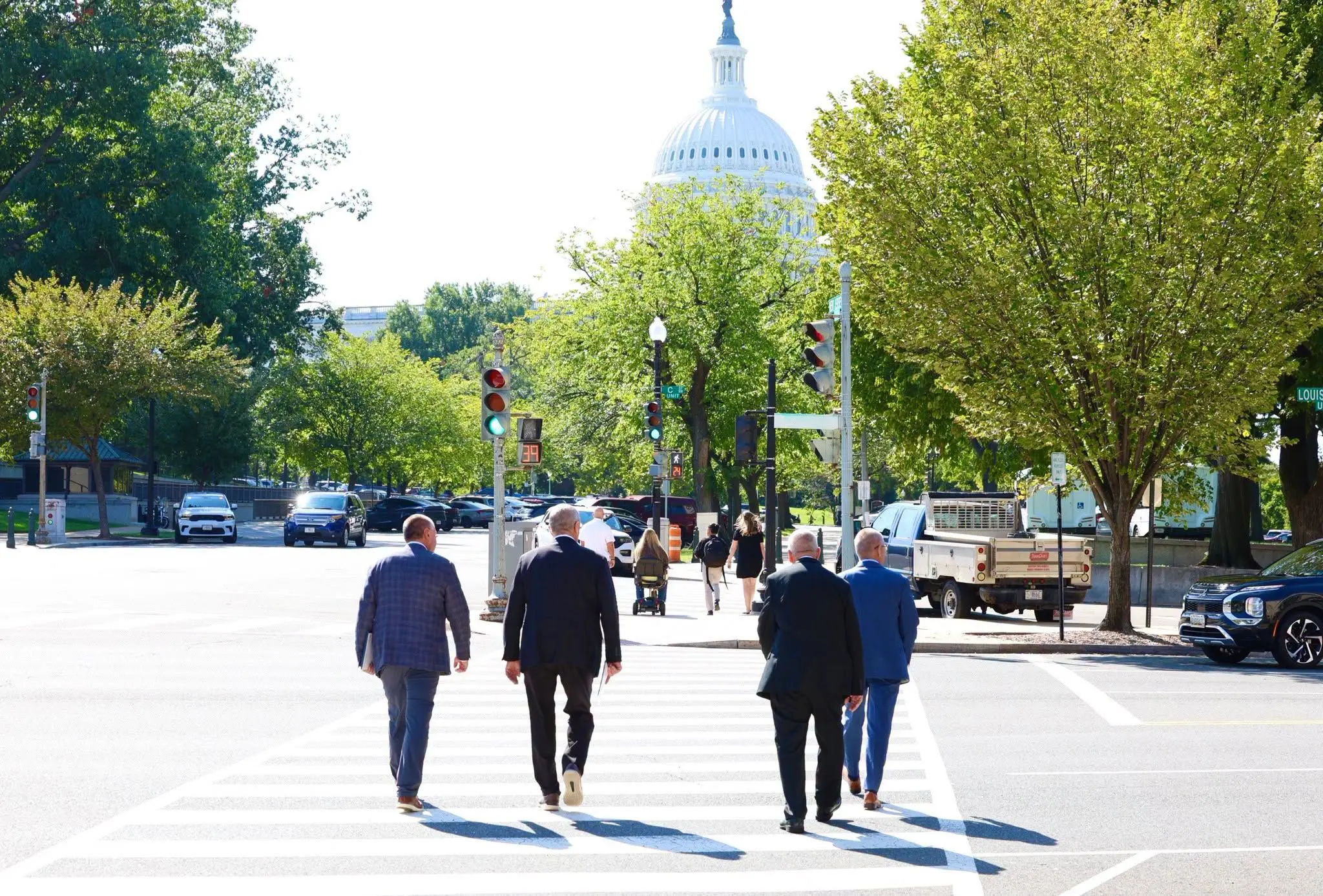
NPPC officers walk to the U.S. Capitol to advocate on behalf of their fellow 60,000+ pork producers.
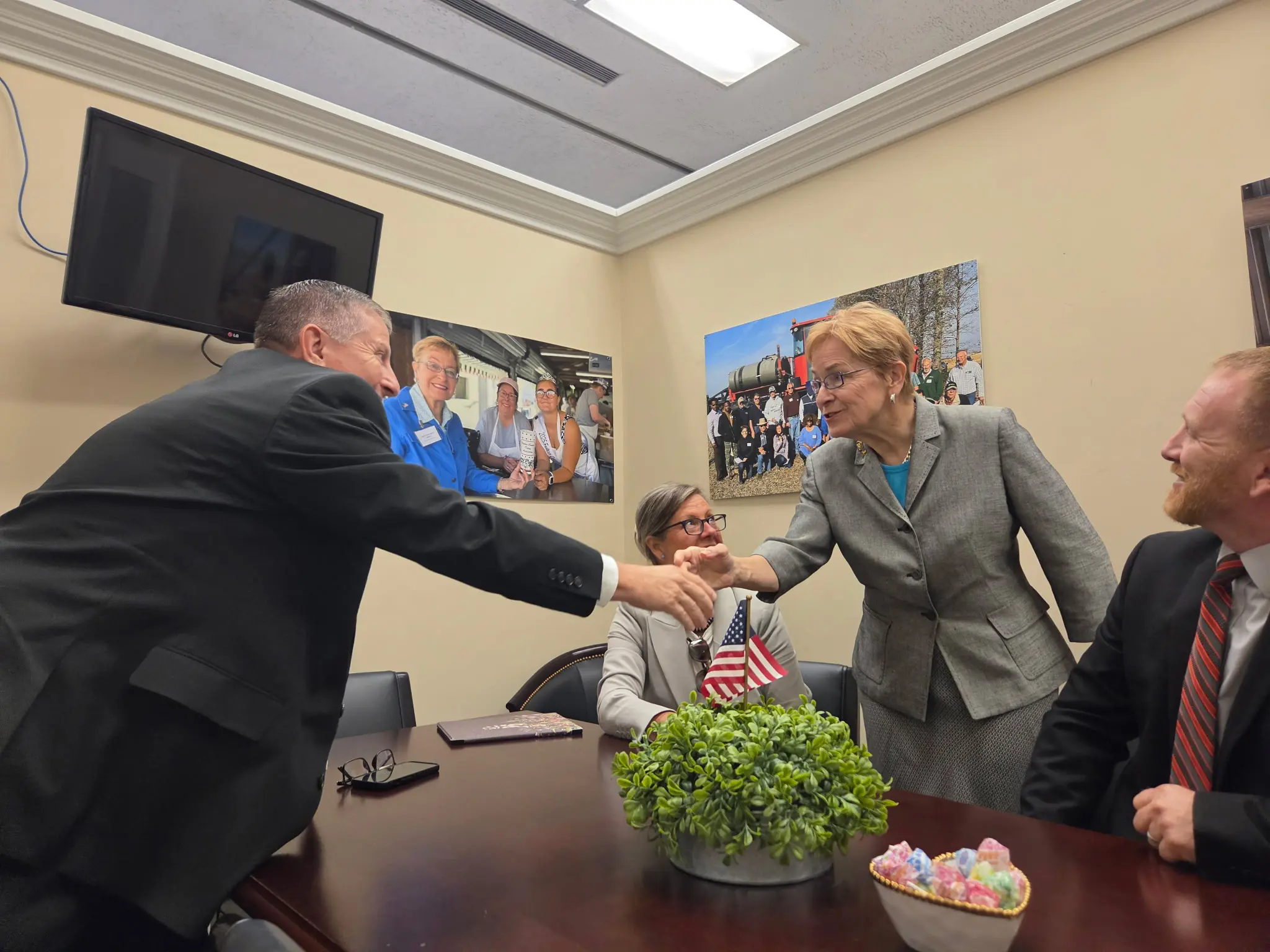
Ohio pork producers meet with Rep. Marcy Kaptur (D-OH).
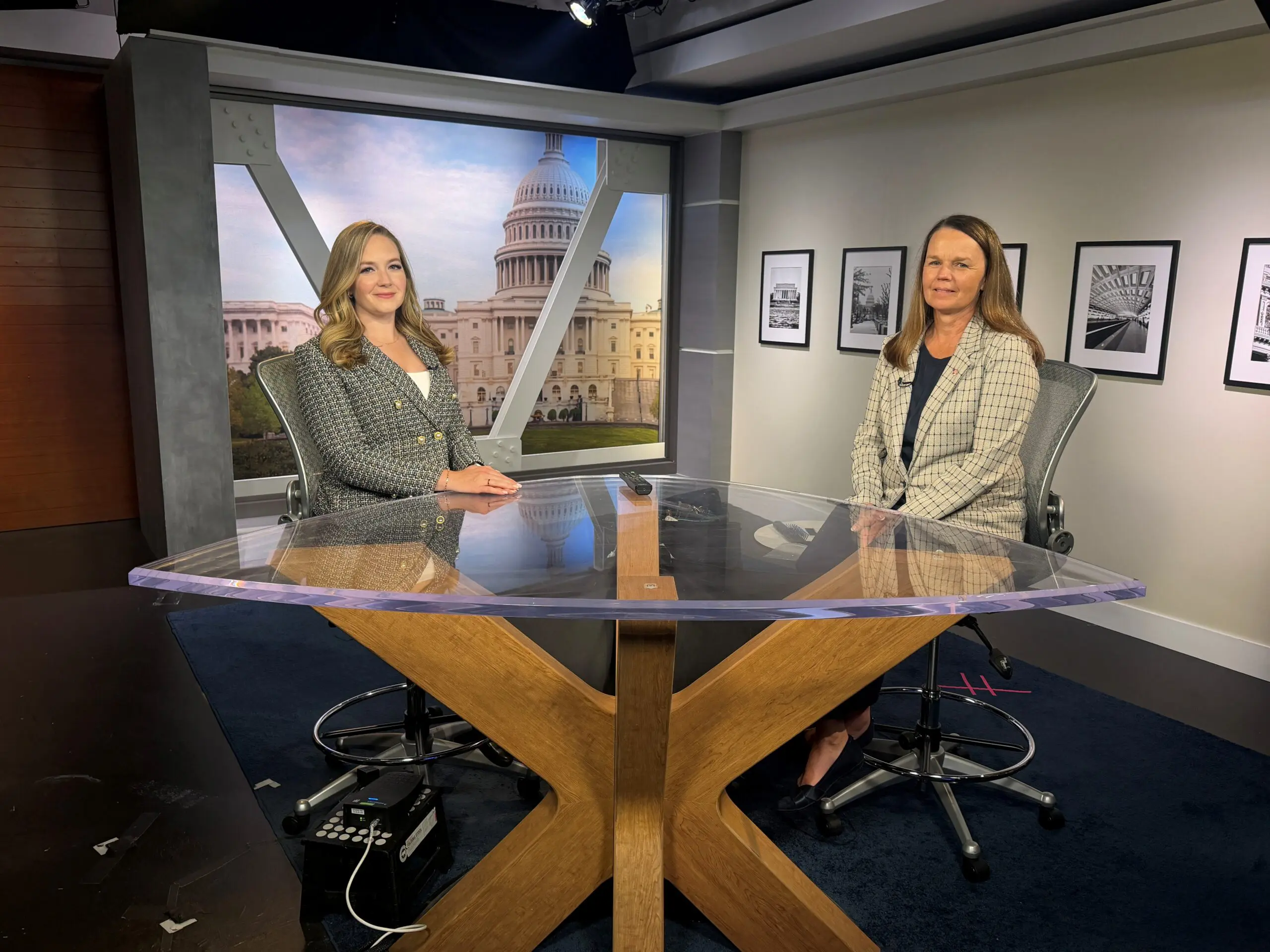
NPPC board member and Iowa pork producer Trish Cook is interviewed by Spectrum TV’s Cassie Semyon.
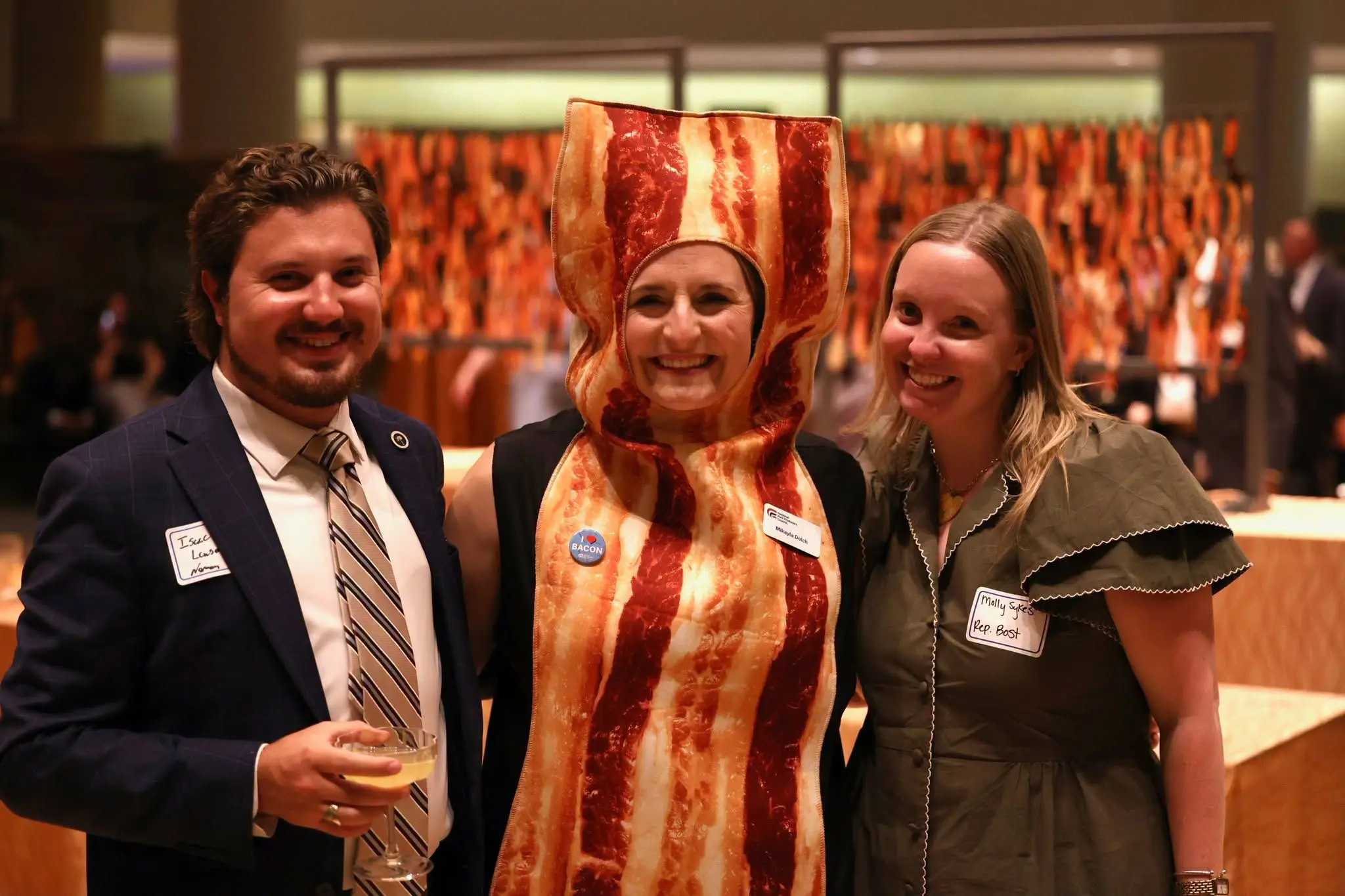
Congressional staff enjoy Baconfest with NPPC Manager of Marketing and Digital Communications Mikayla Dolch (AKA Ms. Bacon).
New Farm Bill Clears Senate Ag Panel, Ready for Senate Vote
What happened: The U.S. Senate Committee on Agriculture, Nutrition, and Forestry advanced a farm bill to the full Senate.
Just prior to Congress beginning its August recess, more than 260 farm organizations, led by the American Farm Bureau Federation and including NPPC, urged the committee to pass the farm bill out of committee.
In addition to provisions on nutrition assistance, farm loans, and conservation, the Senate’s farm bill has a number of provisions strongly backed by NPPC. The bill would require or allow:
- The Feral Swine Eradication and Control Program to become a full program.
- Funding for the Market Access and Foreign Market Development export promotion programs to be more than doubled.
- “Animal protein” to be added to the list of eligible Supplemental Nutrition Assistance Program incentive foods.
- U.S. Departments of Agriculture and Health and Human Services to publish the Dietary Guidelines for Americans every 10 years rather than five.
- Unexpended funds for animal health and disease research programs to be rolled over to the following year.
- Agriculture Secretary to establish additional dog training facilities to safeguard agricultural and natural resources from foreign and invasive pests and diseases.
- Funding increases for the National Animal Health Laboratory Network, the National Animal Disease Preparedness and Response Program, and the National Animal Vaccine and Veterinary Countermeasures Bank.
- USDA to contract with qualified veterinarians to carry out inspection activities on meat imports when there is a lack of Animal and Plant Health Inspection Service inspectors.
- A permanent voluntary certification program to be established for swine diseases–the U.S. Swine Health Improvement Plan–and authorization of appropriations to maintain US SHIP as a permanent program.
The committee’s bill, however, does not include NPPC’s priority for the farm bill: a solution for Prop. 12. The law has caused increases in pork production costs and pork retail prices and prompted other states to consider similar laws, setting the stage for 50 conflicting statutes.
NPPC’s take: NPPC strongly supports a new farm bill with a fix for Proposition 12, which the organization has been fighting for the past six years. NPPC encourages House and Senate chairmen and ranking members to finding consensus on a fix in the final farm bill.
Why it matters: The five-year farm bill sets farm, conservation, forestry, and nutrition policy and authorizes various agricultural programs, including ones related to foreign animal disease preparation and prevention and export promotion.
USDA Buys Pork for Federal Food Nutrition, Assistance Programs
What happened: In August, USDA announced it would make a $27 million supplemental purchase of pork for distribution to various food nutrition and assistance programs, action strongly supported by NPPC.
USDA buys pork and other commodities annually under Section 32 of the Agricultural Adjustment Act of 1935, which authorizes the Secretary of Agriculture to make commodity purchases, entitlement purchases, and disaster assistance using funds appropriated from U.S. customs receipts. So far in fiscal 2026, the agency has bought about $50 million of pork for various federal food programs, including the school breakfast and lunch programs.
NPPC’s take: NPPC applauded USDA’s additional purchase and will continue working with the agency to identify opportunities that can support U.S. pork producers operating under challenging market conditions. More information on becoming a USDA-approved vendor is available here.
Why it matters: The U.S. pork industry has faced numerous economic challenges over the past year or more, and USDA’s Section 32 purchases help support hog and pork markets while securing affordable, nutritious pork products for federal food assistance programs.
EPA Proposes Final ‘Waters of the United States’ Rule
What happened: The U.S. Environmental Protection Agency recently issued a supplemental notice of proposed rulemaking defining “Waters of the United States.” The notice addresses legal concerns raised during the review of the previous proposal and requests comments on additional proposed approaches to better align with the Supreme Court’s direction. The public comment period on the supplemental notice regulation ends Oct. 9.
Last November, the agency released an interim final regulation on WOTUS, a revision of the 2023 rule enacted by the Biden EPA, which ignored a U.S. Supreme Court decision that limited EPA’s authority over waterways.
The Waters Advocacy Coalition, of which NPPC is a member, supports the Trump administration’s latest WOTUS rule, which makes jurisdictional waters that are “permanent,” defined as those that are perennial; wetlands that touch a jurisdictional water and hold surface water for a required duration year after year; and tributaries that connect directly or have predictable, consistent flow to traditional navigable waters.
In comments submitted to EPA in January, the coalition said the interim final rule “better aligns the regulatory definition of WOTUS with the Clean Water Act and Supreme Court precedent” – in particular by defining critical terms, providing clarity and transparency, and preserving the states’ primary role in regulating water resources and land use within their boundaries.
WOTUS rules under the Obama and Biden administrations included features with even a tenuous connection to navigable waters, such as drains, ditches, stock ponds, and low spots on farmland. Those regulations could have required CWA permits for routine agricultural activities near those features and subjected agricultural producers to civil and criminal penalties for violations of the rule.
Why it matters: The WOTUS rule spells out the limits of federal jurisdiction over waterways and wetlands under the CWA. For pork producers, an expansive definition of WOTUS that included farm fields and ditches would have led to significant increases in regulatory and activist pressure and had no benefit to water quality.
Lawmakers Want ‘High-Quality’ Extension of USMCA
What happened: NPPC partnered with dozens of other agricultural and business organizations in endorsing a call from 168 members of the House of Representatives – led by Rep. Rudy Yakym (R-IN) – for the Office of the U.S. Trade Representative “to secure a high-quality extension of the U.S.-Mexico-Canada Agreement.”
On July 1, the U.S. decided not to renew USMCA, which went into effect July 1, 2020, for a 16-year period, opting instead for annual reviews over the next 10 years. The three signatory countries this month are expected to hold a fourth round of talks on the North American trade deal.
In a letter to U.S. Trade Representative Jamieson Greer, House lawmakers pointed out that USMCA has helped reshore production, create jobs, raise wages, promote innovation, and increase exports for the United States and that “a strong joint review process can give further confidence to invest and grow exports.”
The congressional members said while they would have preferred an extension of the agreement, they support USTR’s efforts to improve USMCA. They noted improvements should focus on securing market access promised in the deal; addressing actions by Mexico and Canada that harm American manufacturers, agriculture, services providers, and workers; confronting unfair trade and investment practices from other countries that seek to undermine the North American economy and threaten American jobs; and rationalizing tariff structures to strengthen regional competitiveness in the global marketplace.
Why it matters: For U.S. farmers and businesspeople, maintaining a rules-based USMCA with binding commitments protects their industries. Without the economic might the trilateral agreement provides, incomes would be affected by additional and burdensome costs related to transportation and compliance measures. And, without the certainty guaranteed by the USMCA, U.S. entities would face unreliable markets, and their global competitiveness would be weakened.