

Capital Update – For the Week Ending Nov. 21, 2025
In this week’s recap from the National Pork Producers Council: NPPC President Duane Stateler comments on EPA’s proposed final ‘WOTUS’ rule; lawmakers ask USTR to ‘carefully’ examine changes to USMCA; USDA Deputy Secretary Vaden provides updates to NPPC; NPPC’s Stevermer, Russell, state pork execs at NAFB ‘Trade Talk;’ and Capital Update takes Thanksgiving break. Take a deeper dive below.

Listen to the Capital Update Here!
NPPC President Duane Stateler comments on EPA’s proposed final ‘WOTUS’ rule
What happened: In a win for agriculture producers across the country, the U.S. Environmental Protection Agency issued a Waters of the United States proposed final rule consistent with the U.S. Supreme Court’s 2023 interpretation of the scope of the Clean Water Act’s jurisdiction. This updated rule will cut red tape and provide predictability, consistency, and clarity for U.S. pork producers.
In April 2023, the Waters Advocacy Coalition, of which NPPC is a member, asked EPA to overhaul the Biden administration’s August 2023 WOTUS regulation. In May, the high court limited EPA’s authority over waterways, stating that CWA waters “refers only to geographical features that are described in ordinary parlance as streams, oceans, rivers and lakes and to adjacent wetlands that are indistinguishable from those bodies of water due to a continuous surface connection.”
The Biden WOTUS rule went as far to count drains, ditches, stock ponds, and even low spots on farmlands as CWA waters. This overly broad definition could have required CWA permits for routine farming activities near those “waters” and subjected producers to penalties for violations.
NPPC’s take: “For decades, America’s pork producers have fought against obscure, detrimental, and burdensome ‘Waters of the U.S.’ definitions,” said NPPC President and Ohio pork producer Duane Stateler. “We are grateful to President Trump and EPA Administrator Lee Zeldin for taking steps to resolve this issue once and for all, delivering a proposed final rule that acknowledges what farmers already know – that ditches, farmed wetlands, dried up creek beds, and the like – are not ‘navigable’ and should not be subject to EPA regulations.”
NPPC will submit formal comments in the Federal Register and will keep members apprised of updates.
Why it matters: The WOTUS rule defines the extent of federal authority over waterways and wetlands under the Clean Water Act. The updated WOTUS rule offers greater regulatory clarity and helps shield agricultural producers from unfounded lawsuits brought by activist groups.
Lawmakers Ask USTR to ‘Carefully’ Examine Changes to USMCA
What happened: Congressional Agriculture Trade Caucus cochairs Reps. Jim Costa (D-CA), Dusty Johnson (R-SD), Jimmy Panetta (D-CA), and Adrian Smith (R-NE) led more than 100 members of the House of Representatives urged the Office of the U.S. Trade Representative to “carefully” examine changes to the United States-Mexico-Canada Agreement, citing the benefits it has had for U.S. agricultural producers. The United States, Canada, and Mexico are scheduled for a joint review of the trade agreement in July and may amend it.
In a Nov. 20 letter to USTR Ambassador Jamieson Greer, the lawmakers said the outcome of the review should advance American agriculture and food production, and they asked the trade agency to “work closely with Congress and consider the significant positive impact North American trade has on our communities. Any changes to the agreement should be carefully examined to ensure U.S. agriculture is not negatively impacted.”
Earlier this month, NPPC and more than 125 agriculture and food organizations also urged USTR to be cautious in making changes to USMCA, which they said has facilitated and streamlined the flow of commerce throughout the three countries.
Why it matters: In their letter to USTR, lawmakers pointed out that USMCA streamlined compliance measures and harmonized regulations, thereby generating cost savings for U.S. farmers, producers, and ranchers.
The positive impact USMCA has had on U.S. agriculture, they added, “has yet to reach its maximum benefit. At a time when economic challenges threaten the livelihood of family farms, producers need the certainty provided under USMCA more than ever.”
NPPC’s take: U.S. pork producers export over 25 percent of their pork. With Mexico and Canada as their first and fourth largest export markets, respectively, USMCA has provided continuity and removed market uncertainty in those markets.
USDA Deputy Secretary Vaden Provides Updates to NPPC
What happened: Deputy Secretary of Agriculture Stephen Vaden addressed a gathering of NPPC members.
In a wide-ranging speech, Vaden spoke to USDA’s support of proven safety regulations, the need to break down trade barriers for U.S. agriculture, the Trump administration’s commitment to preserving farmers’ freedom to operate, and finding solutions for the pork industry’s unique workforce challenges.
NPPC’s take: NPPC appreciates Deputy Secretary Vaden’s longtime commitment to support the U.S. pork industry.
In President Trump’s first term, NPPC worked closely with Vaden, who was instrumental in the development of the pork industry’s strategy to argue Prop. 12 in front of the U.S. Supreme Court.
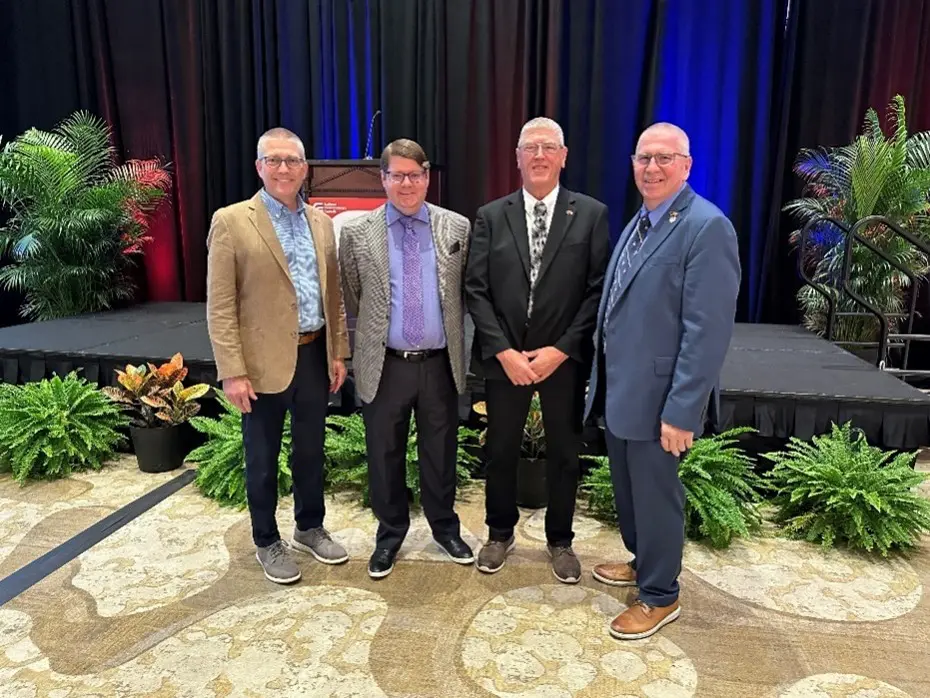
Left to right: NPPC Vice President and Ohio pork producer Pat Hord, Deputy Secretary of Agriculture Stephen Vaden, NPPC President-elect and Iowa pork producer Rob Brenneman, and NPPC President and Ohio pork producer Duane Stateler.
NPPC’s Stevermer, Russell, State Pork Execs at NAFB ‘Trade Talk’
What happened: NPPC Immediate Past President and Minnesota producer Lori Stevermer; state pork executives Colby Ferguson (Texas), Scott Hays (Missouri), and Seth Mitchell (Nebraska); and NPPC Director of Producer Engagement Lucy Russell participated in the National Association of Farm Broadcasting’s national convention in Kansas City, MO, to discuss pork industry issues with dozens of media outlets.
In nearly 40 radio interviews at NAFB’s long-running “Trade Talk” event, NPPC and state pork representatives talked about:
- Fixing California’s Proposition 12, which bans the sale in that state of pork from hogs born to sows raised in housing that does not meet California’s arbitrary and unscientific standards.
- Urging the Trump administration’s Make America Healthy Again commission to adopt science-based policies that recognize the health benefits of pork, protect essential food additives and feed ingredients, and ensure U.S. farmers can provide safe, affordable, and nutritious food for all Americans.
- Addressing the farm labor shortage through reform of the H-2A visa system to make it more useful to animal agriculture. H-2A visas currently allow only temporary, seasonal farm workers into the country.
- Expanding foreign market access for pork through trade deals that eliminate or significantly reduce tariff and non-tariff barriers to U.S. exports.
Why it matters: NAFB’s “Trade Talk” connects agriculture broadcasters and agricultural industry leaders to discuss key issues and topics affecting U.S. farmers. Farm broadcasters are a trusted source, provide an invaluable service, and are a vital tool for communicating with the agricultural community, telling the story of who, what, when, where, and how America’s food, feed, fiber, and fuel systems function.
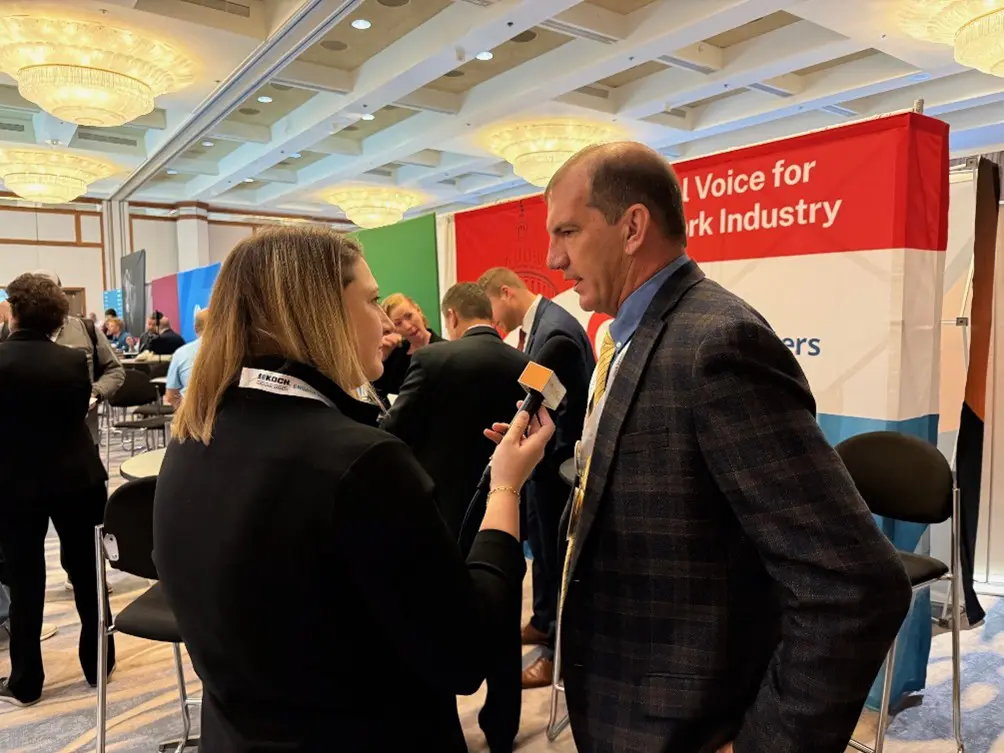
Missouri Pork Association Executive Director and pork producer Scott Hays speaks with Brownfield Ag News’ Carah Hart.
NPPC Immediate Past President and Minnesota pork producer Lori Stevermer is interviewed by Back Roads of Illinois’ Caesar Delgado.
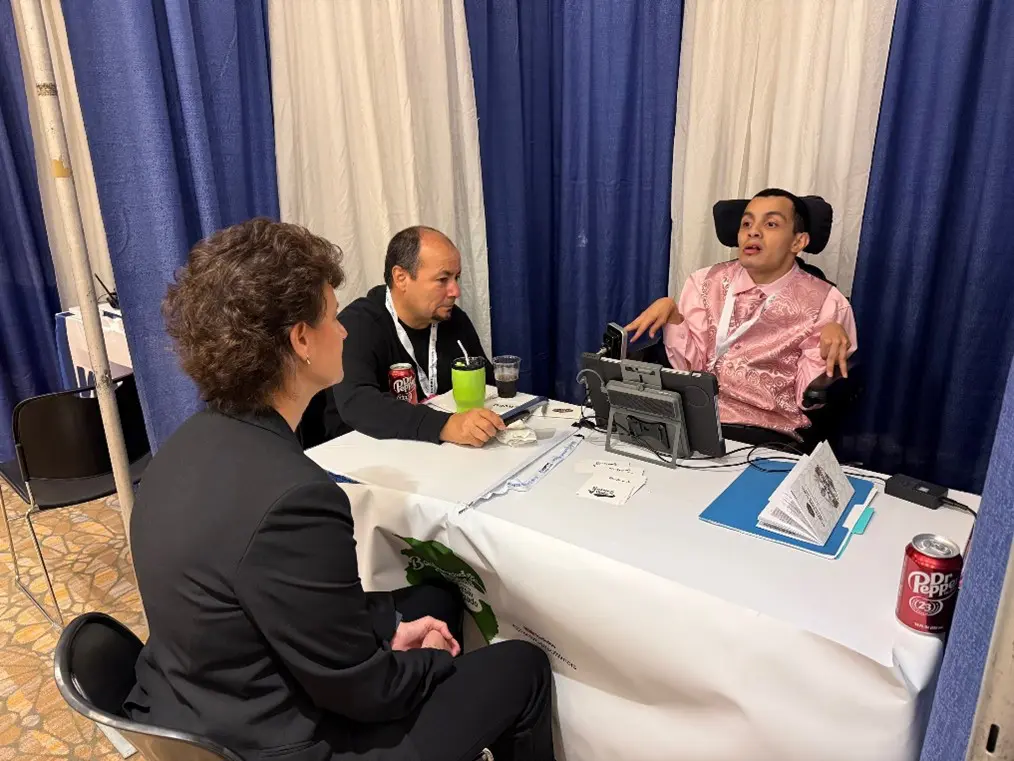
Nebraska Pork Producers Association Executive Director Seth Mitchell talks with Hoosier Ag Today’s Greg Allen.
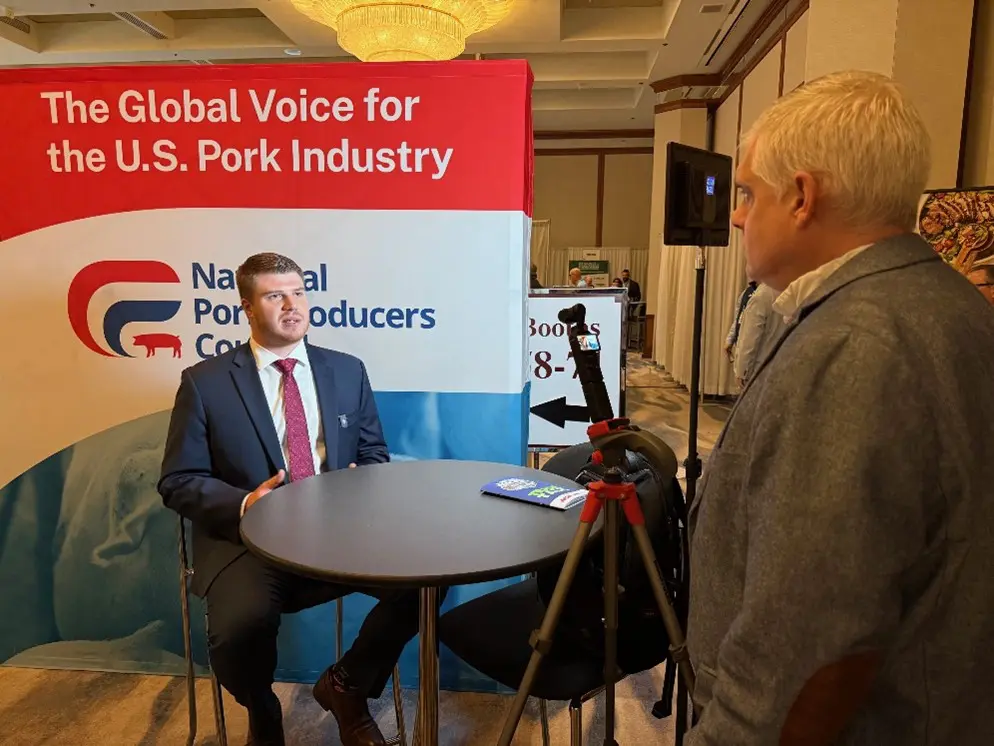
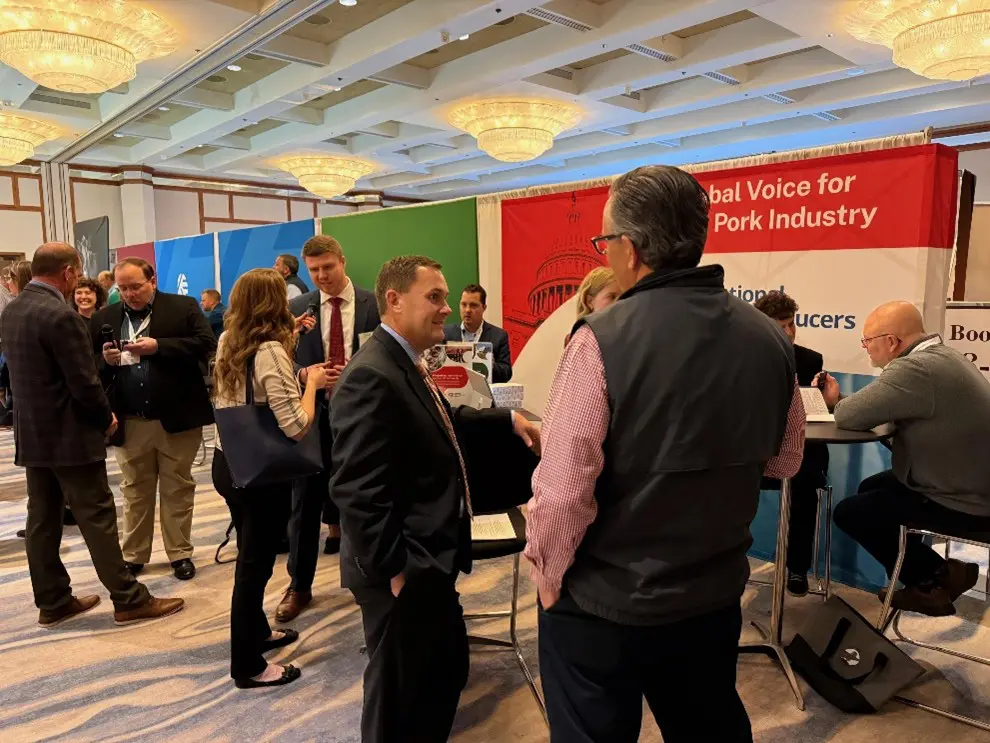
Texas Pork Producers Association Executive Director Colby Ferguson (center) speaks with NAFB attendees.
Capital Update Takes Thanksgiving Break
Capital Update will not be published next week due to the Thanksgiving holiday. Be sure to eat more ham on Thursday!